
ONE of the major issues that have dominated public discourse in recent times is the activities of a group of professionals under the aegis of Africans for Obama 2008. The leading dramatis persona is the indefatigable amazon of the Nigerian Stock Exchange, Professor Ndi Okereke-Onyiuke. Haven listened to her position on the Obama candidature I think that the harmless lady was only being excited about the rising profile of the black race in a strong economy like the United States, taking into consideration what could be seen as its ripple effect for a growing economy like Nigeria.
Taking into consideration the fact that Nigerians are a very sensitive lot, given the various intervening variables that condition their reactions, the Obama issue should be seen as a mere pedestrian discourse that fits into the game plan of a segment of the disgruntled elites who see Okereke-Onyiuke's records with awe and envy .
The thesis of her comments was that Africans for Obama 2008 is not a Fund Raising Organization for Senator Barack Obama. The United States Electoral Law does not allow foreign nationals to donate money to an American candidate for the purpose of election. She explained that the aim of Africans for Obama 2008 was to sensitie and mobilise Africans of voting age in Diaspora and other Americans to exercise their voting right. She never urged them to vote for Obama but simply said, "Go out to Register and vote".
Professor Okereke-Onyiuke was not the only speaker, her Vice Chairman of the group, Dr. Erieka Bennett and two other African Americans reinforced her thesis with emphasis on the need for Africans in Diaspora and indeed other eligible voters in the United States to vote. The forum presented an idyllic setting as journalists and other guests had an interactive session. All questions and observations about Africans for Obama 2008 were discussed fully and the session ended with an announcement of dinner the following week.
The climax of the press briefing was when Professor Okereke-Onyiuke told the relaxing audience that she had about five years ago come across Obama. It was the day of glory when she won a prestigious award from congressional Black Caucus. She is the first winner of this award in Africa. Everybody at the hall wanted to take photograph with her. Senator Barack Obama was on the queue. The man queued for one hour before it got to his turn. He told Professor Okereke-Onyiuke that he had a scheduled meeting but had to cancel the meeting because he was very happy to identify with this prestigious award.
She showed the audience at the conference the photograph she took with Obama. It is interesting to note that Obama was not a world figure as at that time. But uneasy lies the head that wears the crown. The moment she heard that Obama is now a front runner for the White House, she took it as an historic challenge on how best she could mobilise all Africans in Diaspora and other American eligible voters to exercise their voting right. We can see a case of passion in the candidacy of Obama.
Against the background of initial explanation of the basis for initiating Africans for Obama, why then is the controversy dogging this group? I think it is more of sentiment than facts. The Dinner / Concert was publicised in National Dailies and Television apparently to avoid injurious speculation. The target were the elites that believe in Obama's vision and have the wherewithal to pay without coercion.
The media cannot claim any credit for getting the ticket rates because it was public knowledge. Why did a section of the media twist the whole story into "fund raiser" despite the initial World Press Conference and the Dinner / Concert that was covered by virtually all electronic media including NTA, Silverbird, CNBC etc?
It appears to me that most media reports on the controversy over-dramatized the issue at variance with the organisers' intention. The role of the Economic and Financial Crimes Commission (EFCC) in the reporting style of the media raises a big question mark on the way the media were reporting the story. After a telephone invitation for a chat, why must the EFCC contact the media on phone on the same subject leading to speculative reporting that she has been detained, quizzed, arraigned etc. Virtually, all the media reports that published the story quoted the EFCC spokesman, Mr. Tunde Babafemi. It may be necessary for the EFCC to appreciate the way Nigerian media report news, especially when it comes to sensationalism. How ethical is it to say that EFCC quizzed or arraigned someone invited via telephone?
The letter purportedly written by the Director General of Securities and Exchange Commission (SEC), Mr. Musa Al-Faki; requesting for clarification of Professor Okereke-Onyiuke's role in Africans for Obama 2008 developed wings and flew to all media houses before it was "dispatched" to the recipient". This casts a shadow on internal communication between the Securities and Exchange Commission (SEC) and The Nigerian Stock Exchange (NSE) which are supposed to work towards the same goal. This brings into memory some previous issues published by the media before The Exchange received SEC's letter. This is not an encouraging style of communication by the apex regulatory body.
I have read the statement signed by The Exchange's President, Dr. Oba Otudeko, OFR, stating that Professor Okereke-Onyiuke's involvement in Africans for Obama is a purely private affair and she has her inalienable rights so far it does not conflict with her official duties. Similarly, I took time to digest the statement signed by Professor Okereke-Onyiuke where Africans for Obama restated its position in terms of not raising funds for the Obama campaign. I do not think there is any diametric difference between the statement by Obama's campaign group and the position of Africans for Obama.
The latter has never claimed that it is an affiliate and neither has it stated that it raised funds for the Obama campaign. At this juncture, we need to locate Professor Okereke-Onyiuke on the prism of personality. Those who are close to her believe that she is a very pleasant lady with many track records of academic and professional laurels.
She has a strong background of a father who was a Barrister at Law (now late) and a fearless Speaker of House of Assembly in the then Eastern Region. Her mother was a strategic board guru while she is surrounded by a team of highly educated brothers and sisters. These must have partly shaped her world view.
She schooled in the United States where she stayed for 14 years; including her University Education and robust stewardship at the New York Stock Exchange before she was poached by Sir Mobolaji Bank Anthony who was excited to see a Nigerian holding a managerial position in the New York Stock Exchange. Unconsciously, aunty Ndi, as she is fondly called attempts to domesticate American life in Nigeria. She needs to appreciate that the openness of America is far ahead of contemporary Nigeria. If a father imposes corporal punishment on the child in America, the child can call the Police. If a child does that in Nigeria, people would think he is a bastard or has brain tumor or remote control of enemies at work. Like any human being, she may have her own frailties. But on the scale of balance, those who are close to her find her an amiable, hardworking and always ready to make an impact.
Regardless of controversies dogging her activities in the national and international politics, nobody can underestimate her success stories on The Nigerian Stock Exchange. She has put the market on the global map and the records are there forever.
All her activities in the national and international arena being referred to by some groups and individuals were done with good intention. Just peep at her contributions to sports and the role she is playing currently for Nigerian Universities Games (NUGA). She just need to constantly appreciate that the Nigerian environment is different from the United States of America in many regards. We all pray that Senator Barack Obama wins. The same people that are calling for the heads of Professor Ndi Okereke-Onyiuke, other Nigerians and African Americans that share a common vision of Obama would be the first to troop out and identify with their African brother. Let Obama take his seat at the White House, critics of these professionals would be the first to request for Obama to put Africa, nay Nigeria on the priority list of his economic policy.
Thursday, August 28, 2008
Before we crucify Okereke-Onyiuke

Alexander Solzhenitsyn
IN June 1974, or thereabout, a Ghanaian friend of mine presented me with a book, Letter to Soviet Leaders, written the year before by Alexander Solzhenitsyn. The book was translated from the Russian original by Hilary Sternberg and published by Index on Censorship. It was distributed world-wide by Fontana Books, London. Coming three months before the appearance of Solzhenitsyn's The Gulag Archipelago, the letter was a bitter and holistic denunciation of the Union of Socialist Soviet Republics (or the Soviet Union, or USSR): its philosophy, ideology, economics, politics, state system and foreign relations.
The Ghanaian friend who gave me Letter to Soviet leaders, by post, was a foundation graduate student of Computer Science at the University of Lagos. This was in the early days of my socialist consciousness and involvement in organised socialist politics. The reason for his book gift to me was patronising: to open my eyes to the "evils" of what I was getting into. I was angered by his patronising attitude, but I thanked him and read the book.
Ten months after this book gift, I was given another book authored by Solzhenitsyn. But the circumstances were different. I had been detained in January 1975 by General Yakubu Gowon's military government for "subversive" agitation. In April, I requested my jailers for books to read. After a long consideration, I was given two books: The Holy Bible and Solzhenitsyn's The First Circle. I was familiar with the former, but I was seeing the latter for the first time. The message of my jailers was clear. I read both of them. The First Circle is a fictionalised account of prison experience in the Soviet Union under Joseph Stalin (1879 - 1953) and - to some extent-under his successors. Upon my release I obtained my own copy of The First Circle and a Soviet response titled The Last Circle. I scribbled my own comment: Neither First Nor Second Circle (unpublished).
Since these early days, I have read a couple of other fictions and essays written by Solzhenitsyn. They have added to my knowledge of the Stanlinist brutality and irrationality, as well as Russian history. Beyond this, I can testify that Solzehnitsyn, who died in Moscow on August 7, 2008, at the age of 89, was a fine writer, well-read in Russian history, philosophy and literature. He must have been a brilliant army officer, having been twice decorated during World War II. He was a courageous man with a very strong spirit. He was undoubtedly a Russian patriot, as distinct from a Soviet patriot. In spite of all these attributes, however, I am not a "follower" of Solzhenitsyn for reasons I shall provide below.
Many tributes have been paid to Solzhenitsyn since his death. The internet is loaded with them. He was given a semi-state burial in Moscow, and this was shown live by the leading international cable televisions. The limited aim of this piece is to refute some glaring errors, distortions and deliberate misinformation about him and his career-especially by Nigerian media commentators. I shall do this by invoking his Letter to Soviet leaders. After all, this letter was almost his last critique of the Soviet system before his expulsion from the Soviet Union - an act that cannot be defended now as it could not be defended then. But before this, I may sketch, as preface, the trajectory of the great man's life. More copious essays on this can be found in the internet and the world media.
Alexander Solzhenitsyn was born in Russia in 1918, the year after the Russian socialist revolution. His father, a retired army officer, died shortly before he (Alexander) was born. The young Solzhenitsyn was, therefore, brought up by his mother who encouraged him to study widely - mathematics, history, philosophy and literature. He was raised in the Russian Orthodox faith. He took a degree in mathematics. He became a member of the youth wing of the ruling Communist Party and edited several of their publications. He fought in the Society army during World War II, and rose to the rank of Captain.
It was towards the end of that war that his trouble began. His letter to a friend, in which he bitterly criticised Stalin and his conduct of the war, had been intercepted. He was charged with "anti-Soviet propaganda" and "founding a hostile organisation", found guilty and sentenced in July 1945 to "eight-year term in a labour camp, to be followed by permanent internal exile". In March 1953, following the death of Stalin, Solzhenitsyn was given a conditional release. He renounced Marxism and "Communism" during this period. Solzhenitsyn wrote several books during his "labour camp" years, and continued writing after his final release. Some of his books were published in the Soviet Union. In 1970 he received the Nobel Prize for Literature which was given in absentia because he was not allowed to travel to Sweden. In February 1974, Solzhenitsyn was deported from the Soviet Union.
I may now turn to Solshenitsyn's Letter to Soviet leaders which he completed on September 5, 1973, and sent to a number of Soviet Union's leaders of state and party. I shall use that book, as a source of refutations. And for these, I refer only to the article "Alexander Solzhenitsyn and the Russian liberation" (The Guardian, August 13, 2008), contributed by my friend, Professor Emmanuel Eseimokhai, the Academic Chancellor, Basas International Law Bureau, Abuja. I am selecting Eseimokhai because he is at home with the subject. I agree with much of what my friend wrote, but not when he said: "It is not true that Solzhenitsyn hated communism, as some ill-informed scholars have said. He was a communist cadre but disagreed with the Soviet Communist Party on ideological issues".
Not so, Emmanuel. Yes, Solzhenitsyn was a communist cadre. But he renounced Marxism and Communism fundamentally and in their totality - not just their Soviet variants - before he left the prison camps. Solzhenitsyn hated Marxism and Communism with a passion whose ferocity I have seen only in very few personages of his historical stature. Hear this: "Marxism is not only not accurate, not only not a science, has not only failed to predict a single event in terms of figures, quantities, time-scales or locations. Only the cupidity of some, the blindness of others, and a craving for faith on the part of still others can serve to explain this grim humour of the twentieth century; how can such a discredited and bankrupt doctrine still have so many followers in the West!" (Letter, page 43).
Just before this passage, Solzhenitsyn had claimed: "This ideology that fell to us by inheritance is not only decrepit and hopelessly antiquated now; even during its best decade it was totally mistaken in its predictions and was never a science. A primitive, superficial economic theory, it declared that only the worker creates value and failed to take into account the contribution of either organisers, engineers, transport or marketing systems". He then went on to list specific instances where, according to him, Marxism had been "mistaken". Beautiful language; but wrong, pathetically wrong. He was wrong when he wrote his letter in 1973. He is wrong today. But it is not my intention to refute Solzhenitsyn here. I only wish to correct misconceptions about him.
Solzehnitzyn's Letter to Soviet Leaders was essentially a call on Soviet leaders to abandon the ruling ideology. Leave it to other nations and peoples who may want it, he admonished. He blamed all the ills and problems of the Soviet Union on the ideology. He vehemently rejected suggestions that Russian history might, in part, explain some specific structure and practices of the Soviet State, including the labour camp system, internal exile, deportation, secret police, etc. He overlooked the fact that these features of the Soviet system existed in Tsarist Russia. For instance, Leon Trotsky, the field commander of the Russian revolution, was sent on internal exile to Siberia under the Tsar. Ten years after the revolution, he was sent by Stalin on internal exile to Kazakhstan; and then deported to Turkey.
Solzhenitsyn urged Soviet leaders to abandon internationalism. Hear him: "Let's leave the Arabs to their fate, they have Islam, they will sort themselves out. And let's leave South America to itself. Nobody is threatening to take it over. And let's leave Africa to find out for itself how to start on an independent road to statehood and civilisation, and simply wish it the good fortune not to repeat the mistakes of uninterrupted progress. Our people are not going to live in space, or in South-East Asia, or Latin America: it is Siberia and the North that are our hope and reservoir" (Letter, pages 28-29). Abandon "world revolution", he urged. Surrender "communism" to China, and the danger of a terrible war with that country would vanish, he pontificated. Solzhenitsyn was also anti-Jew, cynically and suggestively drawing attention to what he saw as the preponderance of Jews in the leadership and membership of the ruling Communist Party.
I mentioned Solzhenitsyn's courage and patriotism. Let me illustrate with the concluding paragraph of his Letter: "I have amply demonstrated that I set no store by material wealth and I am prepared to sacrifice my life. To you such a vision of life is a rarity - but here it is for you to behold".
Missed targets as opportunity
ONE does not need to be a cynic to suspect that target dates are set to be missed. And that is why I was mightily baffled by the uproar that attended the revelations about the interesting happenings in the power sector. Why were we so shocked? It is not only in the country that things don't always turn out the way that those in power and of power promise they will. Did that eminent organisation, the United Nations not promise us that most of the world's problems would be matter of a memory by the year 2000?
We are all witnesses to what happened. The year 2000 came and vigorously disclaimed responsibility for the failure of the trumpeted certitudes of the bureaucratic and scientific clairvoyants. The lesson: Predictions fail. Targets can be missed. And heaven will not fall. So the grey Eminences at the U.N did the most sensible thing in the circumstances: they ambushed another decade's end on which to hang the world's expectations. Why then should we, in this little corner of the world, demand the heads of our target-missers just because the power sector's performance lags behind our expectations?
Why are we all pretending? We know that our problem is that we would rather take the longer route to arrive at the nearest destination. Even when we know there is a short cut to solving the power problem in the country, we have refused to take that road. And this road is the only one to take us out of the tunnel to luminous light. Forget about reforms. Forget about probes. Give your technical experts a pat on the back or wherever, and banish them out of sight. Enough of precious time squandered using an axe to split a broomstick.
What we really need to do is persuade the National Assembly to approve, as a matter of urgency, the financial instrument to provide funds for the purchase of generator sets for every identified Nigerian citizen, those without emigration on their minds. Consequent upon this noble and historic national recovery intervention, the next natural step is to change the name of the country. That should not be difficult.
Now at last, we have something in common which the new name should celebrate: Generators. So we rename our country Generatoria. We have a choice of two names to call ourselves: Generatorians or Generatese. Should the majority decide in favour of the latter - having had enough problems with the one ending in ".. ria" - we can then advertise our new identity to the international community.
As a mark of maturity and in recognition of the existing good relations between our nation and our former colonial master, we can return the old name, Nigeria, to any surviving relative of that distinguished builder of the British Empire, Captain Frederick Lugard and his wife, Margery. Hopefully, this gesture will be seen as our expression of gratitude to the couple, the madam especially, for coining a name for the disparate cultural and geographical areas cobbled together to add to the white man's burden. It would not be a day too soon. Few will miss a name that has done not much good either to the geographical space or those who occupy it.
And there are other gains. We will all be rid of the Green passport, that pernicious travel identity document that assures its carrier neither welcome nor dignity at foreign land borders, air or seaports; an international legal document of self-recognition that has turned out to be an embarrassing possession. It will be a welcome relief to change the discredited green colour to the colour of crude oil: dirty grey. Should there be objections from the aesthetic in our midst, why, we could settle for the golden glow of the refined product, petrol itself.
Another gainer will be the poor national flag, our unremarkable and uninspiring symbol of nationhood. There is absolutely no more excuse or logical reason we should retain the prominent green segments of the flag. Let's face it, we have long ceased to be an agricultural country! We are, proudly, an oil-producing country! So, no symbolism will be lost by substituting the green of the flag with gold. With luck and international goodwill, a flag that has always suffered from non-recognition among flagpoles at venues of international conferences may begin to compel attention to itself.
Perhaps, the greatest gain of all is that those nations that have hitherto, out of envy or from whatever motive, grudged us our greatness or refused to acknowledge it will be convinced, beyond reasonable doubt, that the one and only indisputable power house of the African continent has finally arrived. Just imagine, over one hundred and forty million generators - corporate and personal - of varying capacities, sourced from all corners of the globe chugging and clanking and whirring round the clock from Sokoto to Sapele, from Badagry to Yenagoa! How could any doubt the evidence of their aching ears and burning eyes?
And there is the possibility, too, that this happy development, this national re-branding, may yield dividends of inspiration to our creative talents. I can imagine a gifted poet of the future forcing the word Generatese that will henceforth designate you and I, to rhyme with words like Grease or Sleaze. So missing out on the target date or dates for generating the power requirement for the nation may turn out to be a blessing in disguise afterall.
Aiyegbusi lives in Lagos.
Joint Tax Board and the National Tax Policy
THE Joint Tax Board recently conducted regional sensitisation workshops on the proposed national tax policy and invited memoranda from the public. The draft document proclaims that "the overriding objective of the Nigerian tax system is to achieve economic growth and development. For Nigeria to pursue an active development agenda or to even carry out the basic functions of government, its tax system should be able to generate resources for government to provide basic public goods and services".
And citing the all- round poor infrastructure which makes investment projects costly, the JTB seeks to try and compensate for poor infrastructure by proposing a new tax system that allows companies higher post-tax profits as a means of ensuring higher domestic investment that will lead to higher economic growth.
The document is essentially an admission of the poor administration of the existing tax system because direct taxes, as JTB explains, are difficult to collect. Nonetheless, even at the low level of tax administration over the years, the apparent contribution of roughly 80 per cent of annual budget expenditure by oil receipts since 1974 (with four consecutive years to date purportedly posting excess crude earnings) and the sizeable amounts of non-oil revenue are proof that the tax system has successfully provided government with ample resources. In view of the purported current excess revenue, does government still require further increases in non-oil tax revenue before settling to play its part as the JTB advocates?
Several aspects of the draft document are contradictory and inconsistent with the stated overriding objective. For instance, one, the JTB proposes wholesale subsidy of firms "by using revenues from Nigeria's oil wealth to alleviate the tax burden on companies in order to diversify the economy". Such a policy will on the contrary render firms inefficient and uncompetitive and dependent on government thereby defeating the set goal of boosting non-oil revenue for government use. Interestingly, except for complaints against multiple taxation which is a symptom of the inequitable sharing of collected revenue, the current level of company income tax has not attracted any protests since it is comparable to relevant tax levels in serious economies.
As a matter of fact, any reduction in any tax with respect to foreign investors will transfer tax revenue forgone to the investor's home government under subsisting double taxation avoidance arrangements. Also the related plan to reduce personal income tax will institute a less progressive tax regime which has adverse implications for aggregate consumption thereby stifling production and economic growth contrary to JTB's advertised goal.
Two, whereas JTB's insistence on reserving tax collection for career civil service tax collectors is well-founded, its call at the same time for tax authorities to retain 10 per cent of total revenue collection at once is selfish and evinces lack of full appreciation of the extent of government responsibilities.
The plan will create a class of overpaid civil service tax officers in place of the rightly rejected private tax consultants, a development that will lead to a restive civil service with different professional cadres spoiling for inflated and matching salaries. Will such turmoil and ensuing inflation promote the promised rapid economic growth?
Three, the planned deliberate shift from direct to indirect taxation for the sole reason of ease of collection betrays reprehensible indolence. The proposal will considerably reduce the workload of tax agencies and result in cuts in the work force, an undesirable spin-off. As if to give the lie to JTB's proposals, the steadily improving administration of the existing tax system by Lagos State has, in the words of JTB Chairman, Ifueko Omoigui-Okauru, "now culminated in making Lagos State the only State in Nigeria where revenues from taxes surpass incomes coming from the Federation Account on a monthly basis". That achievement was in spite of the fact that huge revenues generated by the various ports, and the many industrial and commercial establishments based in the State accrue directly to the Federation Account.
Four, JTB proposes to make VAT the major source of non-oil revenue by in the first instance tripling the current VAT rate of 5 per cent. To raise VAT is inflationary, which dampens demand thereby stifling industrial production. The plan contradicts the set goal of the proposed new tax system. And given the country's healthy revenue position coupled with the established fact that a high VAT rate works against the national interest, it becomes untenable for JTB to push the argument about some overarching national commitment to match the high VAT rates in ECOWAS countries that happen to lack other major sources of revenue.
Five, purportedly to increase tax collection efficiency, the draft policy seeks to make the Ministry of Finance the sole authority on tax policy formulation and also to convert JTB into a policy making body for those taxes whose administration is split across states by the 1999 Constitution. The long and short of this prescription is to centralise the collection of non-oil revenue just like oil revenue. But true to the ingrained character of a cheating federation, the proposal will merely reinforce Abuja as centre for sharing revenue booty literally forcibly taken by federal might from a few states, which are dispossessed and left pauperised to drift into violence, while states that contribute little or nothing to the Federation Account gorge themselves with the lion's share of the public income.
Nigeria has come to rue such purportedly good-intentioned centralisation - it was the vogue in the 1970s - in all spheres of our national life because political and economic progress has eluded the country these past three decades. Militancy in the Niger Delta can be traced to the centralisation and unfair disbursement of oil revenue. We should therefore not wait for centralised collection of non-oil revenue to begin to breed urban guerrillas in states stripped bare of their plentiful non-oil revenue before casting away JTB's wrong-headed and retrogressive national tax policy.
What is needed is a national tax policy that focuses on the efficient implementation of the revenue prescriptions of Section 163 of the Constitution. In addition to the planned unique taxpayer identification number system, the JTB should oversee the development of guidelines for the various tax authorities to collect all taxes levied under national and state laws without any attempt at imposing uniform tax rates throughout the federation. It is proper and desirable for citizens and businesses to freely move and locate in any part of the country to exploit any differences in benefits offered by various state tax laws.
While Item D of Part II of the Second Schedule of the Constitution enjoins the tax authorities to avoid double taxation among states, the vexed problem of multiple taxation in a state (which the unacceptable centralised tax collection was also meant to eliminate) will hardly arise if fair and appropriate levels of derivation principle give back to entitled states from the Federation Account adequate funds for tackling the peculiar problems that face high revenue-yielding areas. The absence of a federal legislation on this issue almost one decade into the democratic dispensation is unfortunate indeed. It should also be noted that proposing centralised tax collection to resolve multiple taxation problem is unwarranted because in a democratic setting, genuinely elected state and local government representatives, who are closer to the people than federal agencies, cannot but be responsive and amenable to the preferences of the tax-paying public regarding what specific taxes and tax rates to levy and apply.
Amidst our vast resource endowment, it is extremely painful to observe that the Federal Government and its agencies would rather dither endlessly, side-track obvious solutions and contrive untested policies which have kept our dear country down for so long. Government should have a rethink.
Joint Tax Board and the National Tax Policy
THE Joint Tax Board recently conducted regional sensitisation workshops on the proposed national tax policy and invited memoranda from the public. The draft document proclaims that "the overriding objective of the Nigerian tax system is to achieve economic growth and development. For Nigeria to pursue an active development agenda or to even carry out the basic functions of government, its tax system should be able to generate resources for government to provide basic public goods and services".
And citing the all- round poor infrastructure which makes investment projects costly, the JTB seeks to try and compensate for poor infrastructure by proposing a new tax system that allows companies higher post-tax profits as a means of ensuring higher domestic investment that will lead to higher economic growth.
The document is essentially an admission of the poor administration of the existing tax system because direct taxes, as JTB explains, are difficult to collect. Nonetheless, even at the low level of tax administration over the years, the apparent contribution of roughly 80 per cent of annual budget expenditure by oil receipts since 1974 (with four consecutive years to date purportedly posting excess crude earnings) and the sizeable amounts of non-oil revenue are proof that the tax system has successfully provided government with ample resources. In view of the purported current excess revenue, does government still require further increases in non-oil tax revenue before settling to play its part as the JTB advocates?
Several aspects of the draft document are contradictory and inconsistent with the stated overriding objective. For instance, one, the JTB proposes wholesale subsidy of firms "by using revenues from Nigeria's oil wealth to alleviate the tax burden on companies in order to diversify the economy". Such a policy will on the contrary render firms inefficient and uncompetitive and dependent on government thereby defeating the set goal of boosting non-oil revenue for government use. Interestingly, except for complaints against multiple taxation which is a symptom of the inequitable sharing of collected revenue, the current level of company income tax has not attracted any protests since it is comparable to relevant tax levels in serious economies.
As a matter of fact, any reduction in any tax with respect to foreign investors will transfer tax revenue forgone to the investor's home government under subsisting double taxation avoidance arrangements. Also the related plan to reduce personal income tax will institute a less progressive tax regime which has adverse implications for aggregate consumption thereby stifling production and economic growth contrary to JTB's advertised goal.
Two, whereas JTB's insistence on reserving tax collection for career civil service tax collectors is well-founded, its call at the same time for tax authorities to retain 10 per cent of total revenue collection at once is selfish and evinces lack of full appreciation of the extent of government responsibilities.
The plan will create a class of overpaid civil service tax officers in place of the rightly rejected private tax consultants, a development that will lead to a restive civil service with different professional cadres spoiling for inflated and matching salaries. Will such turmoil and ensuing inflation promote the promised rapid economic growth?
Three, the planned deliberate shift from direct to indirect taxation for the sole reason of ease of collection betrays reprehensible indolence. The proposal will considerably reduce the workload of tax agencies and result in cuts in the work force, an undesirable spin-off. As if to give the lie to JTB's proposals, the steadily improving administration of the existing tax system by Lagos State has, in the words of JTB Chairman, Ifueko Omoigui-Okauru, "now culminated in making Lagos State the only State in Nigeria where revenues from taxes surpass incomes coming from the Federation Account on a monthly basis". That achievement was in spite of the fact that huge revenues generated by the various ports, and the many industrial and commercial establishments based in the State accrue directly to the Federation Account.
Four, JTB proposes to make VAT the major source of non-oil revenue by in the first instance tripling the current VAT rate of 5 per cent. To raise VAT is inflationary, which dampens demand thereby stifling industrial production. The plan contradicts the set goal of the proposed new tax system. And given the country's healthy revenue position coupled with the established fact that a high VAT rate works against the national interest, it becomes untenable for JTB to push the argument about some overarching national commitment to match the high VAT rates in ECOWAS countries that happen to lack other major sources of revenue.
Five, purportedly to increase tax collection efficiency, the draft policy seeks to make the Ministry of Finance the sole authority on tax policy formulation and also to convert JTB into a policy making body for those taxes whose administration is split across states by the 1999 Constitution. The long and short of this prescription is to centralise the collection of non-oil revenue just like oil revenue. But true to the ingrained character of a cheating federation, the proposal will merely reinforce Abuja as centre for sharing revenue booty literally forcibly taken by federal might from a few states, which are dispossessed and left pauperised to drift into violence, while states that contribute little or nothing to the Federation Account gorge themselves with the lion's share of the public income.
Nigeria has come to rue such purportedly good-intentioned centralisation - it was the vogue in the 1970s - in all spheres of our national life because political and economic progress has eluded the country these past three decades. Militancy in the Niger Delta can be traced to the centralisation and unfair disbursement of oil revenue. We should therefore not wait for centralised collection of non-oil revenue to begin to breed urban guerrillas in states stripped bare of their plentiful non-oil revenue before casting away JTB's wrong-headed and retrogressive national tax policy.
What is needed is a national tax policy that focuses on the efficient implementation of the revenue prescriptions of Section 163 of the Constitution. In addition to the planned unique taxpayer identification number system, the JTB should oversee the development of guidelines for the various tax authorities to collect all taxes levied under national and state laws without any attempt at imposing uniform tax rates throughout the federation. It is proper and desirable for citizens and businesses to freely move and locate in any part of the country to exploit any differences in benefits offered by various state tax laws.
While Item D of Part II of the Second Schedule of the Constitution enjoins the tax authorities to avoid double taxation among states, the vexed problem of multiple taxation in a state (which the unacceptable centralised tax collection was also meant to eliminate) will hardly arise if fair and appropriate levels of derivation principle give back to entitled states from the Federation Account adequate funds for tackling the peculiar problems that face high revenue-yielding areas. The absence of a federal legislation on this issue almost one decade into the democratic dispensation is unfortunate indeed. It should also be noted that proposing centralised tax collection to resolve multiple taxation problem is unwarranted because in a democratic setting, genuinely elected state and local government representatives, who are closer to the people than federal agencies, cannot but be responsive and amenable to the preferences of the tax-paying public regarding what specific taxes and tax rates to levy and apply.
Amidst our vast resource endowment, it is extremely painful to observe that the Federal Government and its agencies would rather dither endlessly, side-track obvious solutions and contrive untested policies which have kept our dear country down for so long. Government should have a rethink.
Joint Tax Board and the National Tax Policy
THE Joint Tax Board recently conducted regional sensitisation workshops on the proposed national tax policy and invited memoranda from the public. The draft document proclaims that "the overriding objective of the Nigerian tax system is to achieve economic growth and development. For Nigeria to pursue an active development agenda or to even carry out the basic functions of government, its tax system should be able to generate resources for government to provide basic public goods and services".
And citing the all- round poor infrastructure which makes investment projects costly, the JTB seeks to try and compensate for poor infrastructure by proposing a new tax system that allows companies higher post-tax profits as a means of ensuring higher domestic investment that will lead to higher economic growth.
The document is essentially an admission of the poor administration of the existing tax system because direct taxes, as JTB explains, are difficult to collect. Nonetheless, even at the low level of tax administration over the years, the apparent contribution of roughly 80 per cent of annual budget expenditure by oil receipts since 1974 (with four consecutive years to date purportedly posting excess crude earnings) and the sizeable amounts of non-oil revenue are proof that the tax system has successfully provided government with ample resources. In view of the purported current excess revenue, does government still require further increases in non-oil tax revenue before settling to play its part as the JTB advocates?
Several aspects of the draft document are contradictory and inconsistent with the stated overriding objective. For instance, one, the JTB proposes wholesale subsidy of firms "by using revenues from Nigeria's oil wealth to alleviate the tax burden on companies in order to diversify the economy". Such a policy will on the contrary render firms inefficient and uncompetitive and dependent on government thereby defeating the set goal of boosting non-oil revenue for government use. Interestingly, except for complaints against multiple taxation which is a symptom of the inequitable sharing of collected revenue, the current level of company income tax has not attracted any protests since it is comparable to relevant tax levels in serious economies.
As a matter of fact, any reduction in any tax with respect to foreign investors will transfer tax revenue forgone to the investor's home government under subsisting double taxation avoidance arrangements. Also the related plan to reduce personal income tax will institute a less progressive tax regime which has adverse implications for aggregate consumption thereby stifling production and economic growth contrary to JTB's advertised goal.
Two, whereas JTB's insistence on reserving tax collection for career civil service tax collectors is well-founded, its call at the same time for tax authorities to retain 10 per cent of total revenue collection at once is selfish and evinces lack of full appreciation of the extent of government responsibilities.
The plan will create a class of overpaid civil service tax officers in place of the rightly rejected private tax consultants, a development that will lead to a restive civil service with different professional cadres spoiling for inflated and matching salaries. Will such turmoil and ensuing inflation promote the promised rapid economic growth?
Three, the planned deliberate shift from direct to indirect taxation for the sole reason of ease of collection betrays reprehensible indolence. The proposal will considerably reduce the workload of tax agencies and result in cuts in the work force, an undesirable spin-off. As if to give the lie to JTB's proposals, the steadily improving administration of the existing tax system by Lagos State has, in the words of JTB Chairman, Ifueko Omoigui-Okauru, "now culminated in making Lagos State the only State in Nigeria where revenues from taxes surpass incomes coming from the Federation Account on a monthly basis". That achievement was in spite of the fact that huge revenues generated by the various ports, and the many industrial and commercial establishments based in the State accrue directly to the Federation Account.
Four, JTB proposes to make VAT the major source of non-oil revenue by in the first instance tripling the current VAT rate of 5 per cent. To raise VAT is inflationary, which dampens demand thereby stifling industrial production. The plan contradicts the set goal of the proposed new tax system. And given the country's healthy revenue position coupled with the established fact that a high VAT rate works against the national interest, it becomes untenable for JTB to push the argument about some overarching national commitment to match the high VAT rates in ECOWAS countries that happen to lack other major sources of revenue.
Five, purportedly to increase tax collection efficiency, the draft policy seeks to make the Ministry of Finance the sole authority on tax policy formulation and also to convert JTB into a policy making body for those taxes whose administration is split across states by the 1999 Constitution. The long and short of this prescription is to centralise the collection of non-oil revenue just like oil revenue. But true to the ingrained character of a cheating federation, the proposal will merely reinforce Abuja as centre for sharing revenue booty literally forcibly taken by federal might from a few states, which are dispossessed and left pauperised to drift into violence, while states that contribute little or nothing to the Federation Account gorge themselves with the lion's share of the public income.
Nigeria has come to rue such purportedly good-intentioned centralisation - it was the vogue in the 1970s - in all spheres of our national life because political and economic progress has eluded the country these past three decades. Militancy in the Niger Delta can be traced to the centralisation and unfair disbursement of oil revenue. We should therefore not wait for centralised collection of non-oil revenue to begin to breed urban guerrillas in states stripped bare of their plentiful non-oil revenue before casting away JTB's wrong-headed and retrogressive national tax policy.
What is needed is a national tax policy that focuses on the efficient implementation of the revenue prescriptions of Section 163 of the Constitution. In addition to the planned unique taxpayer identification number system, the JTB should oversee the development of guidelines for the various tax authorities to collect all taxes levied under national and state laws without any attempt at imposing uniform tax rates throughout the federation. It is proper and desirable for citizens and businesses to freely move and locate in any part of the country to exploit any differences in benefits offered by various state tax laws.
While Item D of Part II of the Second Schedule of the Constitution enjoins the tax authorities to avoid double taxation among states, the vexed problem of multiple taxation in a state (which the unacceptable centralised tax collection was also meant to eliminate) will hardly arise if fair and appropriate levels of derivation principle give back to entitled states from the Federation Account adequate funds for tackling the peculiar problems that face high revenue-yielding areas. The absence of a federal legislation on this issue almost one decade into the democratic dispensation is unfortunate indeed. It should also be noted that proposing centralised tax collection to resolve multiple taxation problem is unwarranted because in a democratic setting, genuinely elected state and local government representatives, who are closer to the people than federal agencies, cannot but be responsive and amenable to the preferences of the tax-paying public regarding what specific taxes and tax rates to levy and apply.
Amidst our vast resource endowment, it is extremely painful to observe that the Federal Government and its agencies would rather dither endlessly, side-track obvious solutions and contrive untested policies which have kept our dear country down for so long. Government should have a rethink.
Nowhere Is Safe
WHEN armed robbers attack ordinary Nigerians, the news dies to its ordinariness. The attitude seems to be that the poor are entitled to more troubles, so that they would remain poor, or possibly decrease in number. On the other hand, the news of two robbery attacks last week presses home the fact again that security in Nigeria is simply lax.
The first account was of robbers invading a section of the office of the Delta State Governor. They must have known their target, the accounts section, which they vandalised and took some money away. How were they able to succeed? It was more intriguing to hear that they gained access to the office through the roof.
We had taken it for granted that such offices would be well guarded by men and fortified with appropriate security gadgets. What type of robbers were endued with such confidence that they could perch on the roof of that building, at an odd hour, without fear of detection?
As if that was not embarrassing enough, robbers struck at the Katsina home of the President. They entered rooms in the building. The President’s mother lost some valuables to the thieves who concluded their assignment undisturbed, and did not bother to disturb her sleep.
We are wondering how they got in and left without being noticed or stopped. Their confidence is stunning. The web of security round the President and his family should be such that those who have no business around him cannot get close to his private or official residence. Is that no longer the situation?
These two incidents partially tell the story of the insecurity in the country. The worse part of it is that the security agencies seem to have lost their investigative and intelligence gathering abilities.
If robbers can strike in these places what hope is left for the ordinary people, who look up to the authorities to provide security? How would the police explain their failure to guard these places? Is any explanation acceptable in these circumstances?
Had the intruders planned anything more sinister, they would have succeeded. The failure of security in the two incidents is glaring. It also exposes the fact that most of the places we think are under security could be porous, placing government officials, as well as official documents in grave danger.
With whom did the robbers plan these operations? Should these be among the cases the police would tell the public that they are still investigating? In some places, the officers concerned with the security of these places would have resigned in embarrassment. Things are so different here.
Incidents like these make Nigerians lose hope in the ability of their governments to protect them. If the authorities cannot take care of their own personal security, how can they think of the security of others?
How the two governments react to these embarrassments could be the defining indications of the importance government attaches to security. Any indecisive moves can only embolden the criminals
Banks: Mega Profits, Poor Services
AS several banks release their profits, which have increased dramatically over the previous years, the Central Bank of Nigeria and the Governor in particular should to some extent justifiably feel that the optimism that consolidated banks will generate better results and provide reassurance has been vindicated. Even if the economic performance in other sectors of the economy failed to match the heady performance of the banking sector, the fact remains that the sector has been the major driver of the Nigerian economy in the past two years.
In the period under review, three Nigerian banks have emerged among the top 1000 in the world unlike 2006 when no Nigerian bank was in that category.
However, with the unprecedented growth in earnings, virtually all around, it is too soon to allow complacency to set in. There are warning at home and from abroad that the sector still has a long way to go before confidence can become unshaken.
For instance, Standard & Poor’s Ratings Services in a recent report, classified the Nigerian banking sector as a high risk one in a global context. Among the reasons given for this low assessment of our banks are high operational risks, a weak judiciary, poor corporate governance, internal security problems and infrastructural deficiencies. It also listed low wealth as well as poor development levels as factors militating against Nigeria’s economic growth, which could make the current profit levels unsustainable.
Internally, banks are coming increasingly under suspicion by customers for what a growing number of depositors consider shady deals and illegal charges bordering on outright fraud. Customers are not aware of charges banks make on their accounts for transactions. Banks think it is only big customers they owe explanations in this direction.
Perhaps the most distrusted bank service today in Nigeria is the ATM card, which was designed to reduce over the counter transactions and speed up payments. It has become the most contentious product of banks.
Where disputed withdrawals occur through ATM cards, it is almost impossible for the customer to get redress. The bureaucracy laid before the customer simply tells him to forget the issue. There are frequent complaints in the media of complaints that have remained unattended in more than a year.
Banks have also concentrated their services in the urban centres. Some streets in Lagos have more bank branches than the total number of bank branches in some States. The vastly under-banked rural areas include most of the local government headquarters, which have their monthly allocations from the Federation Account delivered to them through bullion vans.
Nigerian banks are also victims of the poor infrastructure. They provide virtually all their own power, security, and IT connections at costs, which foreigners can only imagine. Thus, the cost of banking business in Nigeria like anything else is higher than in most countries of the world.
Still, banks must strike a balance between huge profits in the short run, which could undermine their ability to sustain the profitability in the long term and improved services, which are necessary for long term growth.
Banks should urgently address improved services and stem flagging consumer confidence in the sector.
Friday, July 25, 2008
Britain and Money Laundering
By its new law making it mandatory for British banks to report to the police any lodgement by public officers in excess of 10,000 pounds, the British government may be demonstrating a new willingness to help in the effort to stamp out looting of public funds so common in developing countries.
The new law points to departure from the past attitude of rich industrialised countries towards the growing incidence of money looting and its devastating effect on developing countries. Until the tragic events of September 11, 2001 when terrorists massively attacked the United States, the problem of money laundering didn't quite figure in the policy agenda of most developed countries. Apparently because this was particularly injurious to the economies of developing countries, most industrialised nations did not pay enough attention to the problem. As a result, money looting and laundering which are manifestations of political corruption in many African counties, thrived on a large scale. In a few instances, serving African heads of state were known to have lasted their nations' treasury and stashed the proceeds in foreign bank accounts domiciled in Europe and America. That way, some of them turned out to be richer than their countrys in terms of cash reserves. It was such an absurd situation. Yet few western countries were prepared to listen to cries by African people for the repatriation of such wealth and the disclosure of their owners. But that was until quite recently.
We agree with those who say that September 11, has proved decisively the inter-connectedness of nations and the need for greater levels of co-operation in solving common problems affecting them. One of such problems is that of money laundering which has become an effective conduit for illicit wealth makers. In Africa alone, billions of dollars are annually siphoned from national coffers into dormant foreign-based bank account. Nigeria's recent experience is a case in point. Several of our state governors are being fingered for running foreign bank accounts through which they launder tax payers' money. The Alamieyeseigha saga is a classic example. Also during the Abacha regime, billions of dollars were stashed in European banks by senior government officials. Efforts to have all that loot returned to the nation have not been a complete success because of the reluctant attitude of some of the countries in which the loot are domiciled.
Against this background, the new British law ought to gladden the hearts of all those genuinely interested in curbing the incidence of money looting and laundering. The law is expected to make life more difficult for those involved in the refarious trade if it is well enforced by the British authorities.
By the new law, the British government may have acknowledged that the activities of money launderers can do collateral damage to both the developing and developed nations.
The truth is that there would be no looters if there is no haven to store such loot. Treasury looters have thrived largely because they had a safe destination for their loot. It is an argument that African civil society groups had long put up to no avail. Unless the developed nations co-operated with their developing counterparts on this matter, the illicit business will continue to boom, to the further impoverishment of the latter.
The British government has, by its new law, shown what is possible. It deserves commendation. Yet the greater challenge lies in the eager enforcement of this law and the willingness on its part to repatriate what is looted.
The Tony Blair administration has shown an admirable sensitivity to the economic problems of the developing world. This new law is a further demonstration of that. We urge him to however, go beyond that by equally making a definite commitment toward the repatriation of all funds looted from developing countries.
We believe that most European and American countries have all the information they need on who and who are running what account. They should take a cue from Britain by no only enacting new laws against money laundering and looting, but also demonstrated a willingness to repatriate such funds. This, will go a long way in making poverty history or at least curbing it extensively.
The world certainly does not need another September 11, to rise to the challenge of putting money looters and launderers out of business. But doing so will need the co-operation of the rich nations where most of the looted funds are deposited.
Lopsided federal appointments?
There has been a deluge of public outcry, especially from the South, against perceived lopsidedness in the appointment of candidates from the Northern part of the country into political offices at the expense of the other parts of the nation by President Umaru Yar’Adua.
A prominent Yoruba socio-cultural group, Afenifere, for instance, has accused the President of breaching the logic, letter and philosophy of the Federal Character principle as entrenched in the 1999 Constitution. The fear is that, under the ongoing rotational presidency, this development may set a dangerous precedent in which each region will henceforth see governance as a means of extending patronage to its own section of the country at the expense of the progress of the nation.
The North, it is claimed, is effectively in charge of the three arms of government. The President of the Federation, the President of the Senate and the Chief Justice of the Federation – come from the same region – the North. Key ministerial appointments such as Finance, Justice, National Planning, Federal Capital Territory, Agriculture and Water Resources and Defence are also in the hands of northerners.
Northerners hold sensitive security positions such as Director-General of the State Security Service, the Chief of Army Staff, Minister of Defence, Chief of Defence Staff and the National Security Adviser.
The petroleum sector is also effectively in the hands of the North. While the President directly supervises the ministry as was obtainable under his predecessor, the Group Managing Director of the Nigerian National Petroleum Corporation and the Director of the Department of Petroleum Resources are Northerners.
Some critics are also of the opinion that ‘juicy’ positions in the public service and the parastatals are being held by people from Yar’Ardua’s part of the country. These include the Accountant-General of the Federation, the Comptroller-General of Customs, the Economic and Financial Crimes Commission and the Director-General of the Nigerian Television Authority.
Besides, Northerners are fully in charge in the judicial arm of government as they hold the three most senior positions in that sector – Chief Justice of the Federation, the President of the Court of Appeal and Chief Judge of the Federal High Court. The suspicion is lingering as well that the current travails of the Central Bank Governor, Prof. Chukwuma Soludo, may not be unconnected with a plan to completely northernise key finance positions.
Moreover, the panels recently constituted by the President – Council on Energy, the Electoral Reform Committee and the Police Reform Panel – have all been headed by Northerners.
The official response to this allegation is that all the appointments were based on merit.
It is unfortunate that different sections of the country are squabbling over federal positions. It is because the centre controls the lion’s share of the nation’s oil-based revenue. Every section of the country wants its own people to be well represented in the sharing of the ‘national cake’. The Obasanjo administration had been similarly accused of lopsided appointments. The bitter rivalry for the control of the centre is partly due to the nation’s skewed federal structure.
Nevertheless, President Yar’Adua should take another look at the appointments he has made so far with a view to being fair to all sections of the country. Section 14 (3) of the Constitution states that, “The composition of the Government of the Federation or any of its agencies and the conduct of its affairs shall be carried out in such a manner as to reflect the federal character of Nigeria and the need to promote national unity, and also to command national loyalty, thereby ensuring that there shall be no predominance of persons from a few states or from a few ethnic or other sectional groups in that Government or in any of its agencies.”
The notion of federal character was coined to foster the corporate existence of the nation, ensure unity and give every Nigerian a sense of belonging within a pluralistic and diverse nation. This is even more so after recalling that it was perceived marginalisation of a section of the country that plunged the nation into a civil war in 1967. The Federal Character Commission and the relevant committees of the National Assembly should look at the complaints of those who feel marginalised.
Tackling Niger Delta unrest
To tackle the violence in the Niger Delta, the Federal Government should take the following steps:
Initiate a credible, sustained dialogue on control of resources with Niger Delta civil society groups, including militants, activist leaders, religious leaders, women and youth drawn from nominees submitted by councils of ethnic groups in the Niger Delta states.
Institute while this dialogue is proceeding a derivation formula of between 25 and 50 per cent of mineral resources, including oil and gas, to all Nigerian states, and phase this in over five years in order to avoid budgetary shock to non-oil producing states and to encourage exploration and production of other mineral resources throughout Nigeria.
Amend or repeal the 1978 Land Use Act to expand the opportunity for communities to seek compensation for land through legal means and to allow a more transparent adjudication process of potential land seizures.
Seek in parallel with the dialogue on control of resources an agreement with militants that includes a phased withdrawal of troops from Delta towns, concurrent with a weapons-return amnesty programme that pays militants and gang members market rates for guns and enrols them in skills and job training and that pays attention as well to the needs of girls and women who may not carry guns but have roles within those bodies (such as forced wives or cooks).
Bring the increasing number of quasi-independent local government institutions formally into federal structures as part of an effort to rationalise local governments in Niger Delta states, particularly in areas where these are unworkably large or combine substantively distinct ethnicities or communities.
Ensure that security force personnel are paid on time and in full in order to help prevent dependency on oil company payments and illicit and corrupt practices; increase enforcement of penalties for corruption and consider raising salaries; clarify the chain of command; and change the uniform of the “supernumerary police” that provide security services for the energy companies.
Refashion the government/transnational oil company joint ventures that control production to offer residents a substantial ownership stake along the lines of what corporate majors including Royal/Dutch Shell, ExxonMobil and Conoco have done in Canada’s Arctic.
To the State Governments:
Engage more fully with professional, nongovernmental organisations that demonstrate a capability and willingness to assist communities to take responsibility for their own development.
Accelerate steps to implement poverty reduction strategies outlined in State Economic Empowerment and Development Strategies (SEEDS) that have been developed in conjunction with Nigeria’s national umbrella anti-poverty strategy, NEEDS.
Make budget details publicly available and respond to queries about specific spending patterns and projects.
To the Energy Companies:
Improve measures to ensure transparency of contracts and other community payments, including for surveillance, development projects and compensation for land use and pollution, and in particular: (a) honour company commitments and ensure that payments are made in full, by bank transfer – not in cash – to the intended recipients; (b) conclude agreements wherever possible that provide for individuals and local communities to be compensated for land use and pollution; and (c) seek independent mediation or arbitration when agreements are in dispute.
Prioritise long-term ability to operate in Nigeria over short-term production goals and seek community assent before proceeding with production-related projects.
Develop partnerships with non-governmental, community-based bodies with a demonstrated ability to provide skills training and capacity building for development projects, including women’s and religious groups that have played significant roles in mediating among various ethnic groups and actors in the past decade.
Nigerian Banks Among the World Best
Quite often the road to good fortune could be rough initially. When the Central Bank governor, Professor Charles Chukwuma Soludo, announced the banking consolidation programme on July 6, 2004, to bank chief executives in his office in Abuja, many of them were taken aback. Banks that were finding it difficult to raise the then stipulated N2 billion shareholders’ funds saw the directive to raise N25 billion as minimum amount for doing business in the country as the death knell for the industry. The CBN governor was roundly criticized by many industry commentators. The National Assembly even made moves to reverse the policy but the strong support which Chief Olusegun Obasanjo, the then president, threw behind the policy made it to stay.
Professor Soludo did not stop there. Shortly after the banking consolidation exercise he further announced that any bank that could shore its shareholders’ funds to $1 billion would be allowed to manage some portion of the Nigerian foreign reserves. This was again seen as a very tall order. The reason for this was straightforward.
Getting the prescribed N25 billion shareholders’ funds by the banks was never a tea party. From over 90 banks that were in operation before the new shareholders’ funds prescription, only 25 banks emerged. Even so, it was not easy for some of the 25 that made it. Against this backdrop therefore, a call for $1 billion shareholders’ funds was like some fairy tales to the 25 banks that survived the exercise.
However, some of the banks with foresight took up the challenge and what looked like some nightmare for the industry turned out to be a bag of good fortune. The same banks that literally crawled to the N25 billion mark soon started the chase for the $1 billion target and virtually all those that attempted it met with good success. This was seen as the kick-off of the second phase of self-induced consolidation in the Nigerian banking industry. Operators imposed on themselves minimum shareholders’ funds of $1 billion, about N120 billion.
Not only has this given Soludo a good sense of satisfaction that his dream to build very strong financial institutions in the country has now been acknowledged, even outside the shores of Nigeria the banking industry is now beginning to be recognised as well.
For the first time in the history of the industry, some Nigerian banks were adjudged by the Banker Magazine, a subsidiary of Financial Times of London, to be among the best 1000 globally last year in terms of capitalisation. This year, six Nigerian banks also made the list. They include Oceanic Bank, Intercontinental Bank and Access Bank. The others are Guaranty Trust Bank, the United Bank for Africa and Zenith Bank. The six also made it to the top ten leading African Banks’ chart in that order and it goes to show the mileage the industry has covered within this short span of banks consolidation.
The Banker Magazine even acknowledged this in the report. “Buoyed by the Central Bank of Nigeria Governor, Chukwuma Soludo’s 2005 N25 billion minimum capital requirement legislation, Nigerian banks have grown from strength to strength,” the magazine noted.
This is quite commendable and it goes to show that whenever the country is determined to do a thing, with commitment and zeal on the part of those executing the policy, a lot could be achieved. We therefore salute the astuteness of the managers of these banks as well as the regulators and call on others to work hard to make the list next year. Those that made the list must not rest on their oars because getting to the top is one thing and remaining there is another.
Even so, we believe the real trophy for the industry would actually come when the banks are able to serve as the engine of growth in the economy. Nigerians or precisely the industrial sector can hardly make any meaning from these awards when they cannot access funds for investment within the country. Getting loans for manufacturing activities is still such a tough hurdle for most manufacturers across the country. It is either the banks are demanding some incredible assets as collateral which the investors may not be able to meet or would simply load the lending rate with some hidden charges to discourage the investors.
Since the banks have not been forthcoming in assisting operators in the manufacturing sector, a lot of people going into business these days have found commerce more attractive since banks are much more willing to lend to this sector. But simple economic theory dictates that growth of an economy is largely dependent on the growth of the real sector and with this sector lagging so much behind in terms of growth, the nation’s economic growth will continue to suffer.
We acknowledge the fact that lending to the real sector carries substantial risk element considering the volatile policy environment where policy somersaults are common place. It is equally a fact, however, that the higher the risk the higher the returns. It seems the unwillingness of Nigerian banks to take risk was what was responsible for the general low returns on capital as reported by the Banker Magazine. According to the magazine, “this year’s figures show that despite such enormous growth, return on capital for the sector has actually fallen from 21.9 per cent last year to 18.6 per cent while in South Africa, return on capital leaped from 38 per cent to 42 per cent.”
We would want the banking sector to address this aspect of their business operations even as they continue to win laurels both home and abroad because it is only when the real sector is grown that their trophies would make meaning to the generality of Nigerians.
A fate made in Niger Delta
A trumpeter must attend to the boil on his lips with uttermost circumspection - Nigerian proverb
TOO many reckless advisers have found spaces in the thinking that tends to form this government’s policy thrust on the Niger Delta. If they do not advise military action, they abuse the inhabitants of the region for its wanton policy thrust.
It is easy to forget that Nigeria ’s fate is tied to the Niger Delta. There have been hints that the hostilities in the region will adversely affect funding of the 2008 budget (still under going amendments). This position is being economical with the truth. Without a peaceful and quick resolution of the Niger Delta, very little progress will be made in almost all spheres of our national life.
Oil is central to the economy. It drives and gives all the States and Local Government Councils their only steady source of revenue. The Federal Government cannot meet its obligations without the oil wells running at steady steam.
The seemingly most important programme of this administration – the power emergency – is ruined without peace in the Niger Delta. Most of the proposed projects, and the ones under construction, will depend on gas from the region. How will they succeed? Can Nigeria get out of its electricity problems without the gas from the Niger Delta?
Unfortunately, the kind of attention the Niger Delta gets results in a full-blown war of attrition for Nigeria . Those suggesting military action are under the illusion that it would bring fast resolution to the militancy of the youths and ensure steady flow of the oil wells.
There are no guarantees. While the military action lasts, would oil exploration continue? Can Nigeria survive further shut down of its oil wells? Would the military action stamp out restiveness if the current issues remain unattended?
Nigeria has to explore all the opportunities for peaceful resolution of the issues. We condemn the criminality that has crept into the legitimate agitations for meaningful lives for the region that keeps the economy humming. Governments also have to accept responsibility for refusing to listen to these agitations before they grew to these indiscernible proportions.
President Umaru Musa Yar’Adua and his team inherited the problem, but like those before them, they are still immersed in the comfort of playing government instead of getting to grips with an enormous headache.
The feeble steps the administration has taken so far show it had poor plans to solve this problem. Like in the past, concerns over the Niger Delta only grow when unstable crude oil supplies result in low revenues for Nigeria . Those concerns hardly go beyond measures to restore certainty in national earnings from oil.
However, a trumpeter cannot live forever with a boil on his lips. How he bursts it without mortally hurting himself is the type of challenge that lies before this government.
Ready To Die Than Live
ON a day the news broke that 14 Nigerians executing the hazardous sea crossing into Spain died, while another 23 were rescued, not a word about the incident was mentioned at the National Assembly.
The Ministry of Foreign Affairs already has a reputation for ignoring these incidents.
The closest the National Assembly came to discussing any foreign affairs that day, was the anger at the House of Representatives, where members worried about the non-recognition of their importance as ambassadors. The issue was issuance of diplomatic passports to all members of the National Assembly.
They are working furiously on a law to ease their passage when they go abroad.
Correct figures of Nigerians who perish in this ultimate desperate escape from the uncertainties at home are unavailable.
Spanish rescue agencies record thousands of these deaths annually. Nigerians are suspected to form the bulk of the illegal immigrants who adopt this precarious approach.
Nigerians head abroad under unimaginable circumstances. They have been neglected beyond comprehension, without hope, and no inkling of tomorrow.
Many die. Those who survive spawn further reckless ambitions for millions who believe they have no future in this country. They have many sound reasons in this regard. The most striking of these is that governments, at all levels, do their barest minimum about the welfare of Nigerians.
It seems they have never read Section 14 (2b) of the Constitution, which states, “The security and welfare of the people shall be the primary purpose of government”. There are no government programmes to achieve this laudable constitutional provision. Nigerians are left groping about everything.
The Spanish coast guards rescued 20 men and three women. One of the women was pregnant. Some accounts said among the dead 14 were children who were thrown over board when they perished in the rigours of the travel in open small boats.
At 120 kilometres from the coastal town of Motril , high waves battering their boat imperilled them. Without rescue, they would have died too. Why would they take that type of risk? The answer lies in the existence Nigeria offers. They consider life in Nigeria tougher than facing the open sea, after tortuous journeys that include long treks through the Sahara Desert , which claims a good number of lives, encounters with brigands and armed rebel groups.
Ironically, those who survive, when deported, as Spanish laws dictate, try to make their way back. They have totally lost hope in Nigeria ’s ability to provide for them. The alternative, they claim, is death.
Does it make much difference if one dies at home or in open sea? To those concerned it is all the same. We could romanticise the situation, but the truth is that our governments should be alive to their responsibilities to Nigerians.
They are not. Those in authority cater only for themselves. This explains the tempers that rose in the House of Representatives, over passports, while majority of Nigerians do not know where to get their next meal.
Nigeria: Saving For The Future
ONLY 56 of Nigeria’s 109 Senators were on their seats when a bill that proposed a fund to make savings for the future had its second reading last Tuesday. The other 53, almost half the number, were absent. Just 34 Senators supported the bill, 18 opposed it and three abstained
These revelations are important.
An otherwise urgent matter of saving for future generations turned into an acrimonious issue, with Senators drawing tenuously from the Constitution to strengthen their opposition to the bill.
Senate President David Mark ruled out the bill.
The tenacity of its prime mover Senator Bassey Ewa-Henshaw saved the day. He was dissatisfied with Mark’s ruling; relying on Order 73 of the Senate Standing Rules to call for a division. He won.
Ewa-Henshaw’s bill wants a certain amount from the Consolidated Revenue Fund for an investment fund that cannot be spent in the next 25 years. The life of the fund would be renewed at expiration.
Those opposed to the bill point to the Constitution. Section 162 (3) states, “Any amount standing to the credit of the Federation Account shall be distributed among the Federal and State Governments and the local government councils in each State on such terms and in such manner as may be prescribed by the National Assembly”.
The Senators argued that this provision ruled out the retention of any money in the Federation Account, and most unlikely, one that would be saved for 25 years. And they are right. Nigeria is a multi-party federation where different parties canvassed for votes on different manifestoes. Once the Revenue and Fiscal Mobilisation Commission shares revenue from the federation account according to the law passed by the National Assembly, the National Assembly makes Appropriation Law only for the Federal Government - not the states, not the local government.
It is true that Section 80 (3) awards the National Assembly tremendous powers over public funds. Section 80 (3) states, “No moneys shall be withdrawn from any public fund of the Federation, other than the Consolidated Revenue Fund of the Federation, unless the issue of the moneys has been authorised by an Act of the National Assembly”.
But that money is the share of the federal government according to the revenue allocation formula - which in itself is a creation of the law of the National Assembly. This means that the National Assembly can make laws on the appropriation of the federal fund. Hensahw’s bill can only set aside part of federal fund for investment. Section 80 (4), “No moneys shall be withdrawn from the Consolidated Revenue Fund or any other fund of the Federation, except in the manner prescribed by the National Assembly,” clears any further doubts about the powers of the National Assembly in this regard.
There is no ambiguity about ownership of the money, as it affects States and local government councils. Their respective legislatures may so decide what to do with their portion of money from the Federation Account. They may follow the federal path to start saving for the rainy day too.
Nigeria’s future is frightening notwithstanding the platitudes about Vision 2020.
By the most conservative estimates, crude oil sales fetched Nigeria $600 billion in the past 40 years and about $232 billion in the last eight years alone. Where is the money? If a fraction of it was meaningfully invested 40 years ago, Nigeria would easily raise the $50 billion required to finance the NDDC master plThe future is important enough for the National Assembly to have committees studying and providing for it.
Blind Flights Again
IS it possible that the Federal Government did not hear about the power outage at the Murtala Muhammed Airport , Lagos that knocked off the radars and reduced air traffic control to guesswork? If government heard, it did not consider the matter of significant importance hence its silence.
Right in the midst of the Senate’s probes of the management of the aviation sector in the past eight years and a court trial of some of those involved, planes were landing in Lagos without the most elementary navigational aids last week.
There was no alarm. Nigerian pilots are used to blind flights. There were no crashes too. Is this the attitude of the government that will lead Nigeria to be one of the top 20 economies in the next 12 years? This extent of disinterestedness simply boggles the mind.
Nigeria daily acts as if it has a covenant with primitiveness. Apparently, it is nothing to be ashamed of, as we trumpet our readiness to be a world leader in 2020. It is stultifying.
Less ambitious countries are doing better. How can a country’s prime airport run for hours without electricity, without radars? There are no queries because the authorities know they are guilty of similar unseriousness that endangers the lives of millions of Nigerians on land, sea, air and at home.
This incident would pass like the ones before it without any remedy. Had there been an accident, the government would gleefully set up an enquiry, throw words about on how unacceptable the situation was and absentmindedly promise to punish those responsible for the disgrace.
Nigerians are sick of these pretences. Governments that care for their people do their best to protect them. They would not be carefree over issues like air safety, since they realise the importance of air travel to the economy. They would be embarrassed to witness the deaths of their citizens, whose only offence would be that they travelled by air.
The unimportance of the security of lives has long been stated. Repairs on the runways of the airports in Lagos, Nigeria ’s busiest gateway, have not been finished after four years.
From the air, rested equipment testifies to an abandoned contract. In past five years, the Federal Government refused to fund the repairs and resorted to cosmetic measures to assure the world the runways were working.
At the height of the embarrassment, uncertainty pervaded scheduled flights to Lagos . Three years ago, management guru, Tom Peters, cancelled lectures billed for Lagos and Port Harcourt because nobody was sure if his plane could land.
What was the government’s response? It immediately amassed some diplomats on the tarmac of the Lagos airport to prove the runways were in order. The same runways are still in limbo. Today, one runway serves the local and international airports, resulting in normal delays of over 30 minutes for domestic flights, some of which last less than an hour. Who cares?
Perhaps air safety needs to be among government’s seven-point agenda to get attention.
Niger Bridge Falling
DR. Hakeem Baba-Ahmed, a permanent secretary in the Office of Secretary to the Government of the Federation, is the latest voice to warn about the imminent collapse of the 43-year-old Niger Bridge .
His testimony at the Senate Committee public hearing on the transport sector, passed without much attention, though he was the only one who mentioned the fate of the bridge, the link between the South West of Nigeria and most of the South East and the South South.
Former President Olusegun Obasanjo made a second Niger Bridge an election issue in 2003. President Umaru Musa Yar’Adua promised to build it in his 2007 campaign, yet there is no budgetary provision for it. The entire budget for federal roads in 2008 is a laughable N79 billion! Last year the estimated cost of a new Niger Bridge was N58 billion.
“I must say this since we are in a public hearing that the Niger Bridge is collapsing. The Federal Government cannot do it, and in fact should not do it. The private sector should now be involved,” Dr. Baba-Ahmed, former permanent secretary in the Ministry of Works, told the senators.
Dr. Baba-Ahmed’s suggestion that the Federal Government should not repair bridge is prejudiced. On what basis did he make this recommendation to the Senate? If he considered the bridge an emergency, why would he opt for measures that would delay its repair or the construction of a new bridge?
When it comes to the Niger Bridge Federal Government vacillates. How many bridges in Nigeria did the untested public private partnership build? Why make the Niger Bridge a guinea pig for a N58 billion project?
The Niger Bridge got to this state from similar guiles. There were talks that a new bridge was too expensive. Was Dr. Baba-Ahmed confirming government will not build the Niger Bridge ?
Regularly, concerned media writes about the state of the bridge. Television stations have done series of features on its loosened bolts, eroded parts and unstable foundations. The government ignore these. President Yar’Adua has not said a word on the Niger Bridge after the campaign. His 2008 budget ignored the bridge – his economic adventures do not include its construction.
This bridge cannot collapse without tragic consequences. Hundreds of thousands of travellers use the bridge, possibly the busiest in Nigeria , day and night. They have no alternatives. There is no feasible ferry service.
In addition, the collapse of the bridge would cut off the South East and most of the South South (Akwa Ibom, Cross River , parts of Rivers and Delta States ) from the rest of Nigeria .
Their access to Nigeria would be through unimaginable detours that are not developed to bear the type of traffic the Niger Bridge accommodates. Economic bases of Onitsha , Aba , and Nnewi would be shut out.
Government should reach a fast and firm decision on the Niger Bridge , a decision that should save lives of its users, not one that would result in an enquiry into the collapse of the bridge.
Divesting From Nigeria
ONE of the few recent news items that should concern government and citizens alike is the increasing rate of divestment from Nigeria by leading multi-nationals in the petroleum and other sectors of the economy.
Dunlop, the last domestic tyre producer, and once one of the nation’s largest industrial conglomerates and employers of labour, intends to close shop. Only its imported products would soon be available, to serve the Nigerian market from more favourable economic climes.
Its major rival Michelin based at Trans-Amadi Layout in Port Harcourt folded up two years ago without notice because the nation was enjoying a crude oil price oil boom which made contributions from non-oil sectors almost dispensable to government. Moreover, governments in these parts have little time for industries and most of the productive sectors.
The causes of the closure remain the same and they will inevitably claim more casualties unless the Federal Government institutes urgent action to avert irreversible de-industrialisation of Nigeria. Dunlop like Michelin closed shop because it was unable to compete with imports the low tariff policy of government encourages and the escalating cost of doing business in Nigeria.
Collapsed infrastructure and increasing cost of generating power which the private sector bears are other factors. Even the promised declaration of emergency cannot cut the cost of energy inputs fast enough neither can road construction be speeded up in a way that would save companies such as Dunlop from profit erosion.
Closures of Dunlop (and Michelin before it) represent the inevitable consequences of policy options long ignored on account of the nation’s over-dependence on crude oil earnings. At the Nigeria Economic Summit Group workshop nine years ago, a presentation demonstrated that return to massive cultivation of rubber would not only save Nigeria billions of Naira in imported raw rubber but would generate foreign exchange revenue equal to that of crude oil by 2020. It would also make the price of locally produced tyre more competitive, save jobs and create other jobs because the benefits are multiplicative.
Almost a decade after, no government acted on that proposal. The closure of the two largest tyre manufacturers was a tragedy long foretold. Now, the nation will reap the consequences of ignoring viable and long term and sustainable projects while we continue to focus on crude oil which is probably approaching its peak before the decline starts.
Dunlop’s departure, whether partially or in full, would result in several hundreds of people being unemployed. Those over 45, with their education and experience, most probably will never be able to secure paid employment again, in a country where the same factors that shut down industries do not encourage entrepreneurship.
The closure of these industries are not acts of God –– as Nigerians are wont to suggest when they reap unpalatable results — it is the handiwork of governments from the 1970s to date.
Sadly, there are no indications that changes from the insipid past is an ambition of even the present government.
Power Sector Reforms Report Says Nothing!
THE 17-member Power Sector Reform Committee the President inaugurated on September 7, 2007 has submitted an important report that contains nothing new.
Under, the heading GENERAL, the Committee made the following observations, “The power sector requires urgent government intervention to save it from collapse. Immediate intervention is needed to optimise the existing infrastructure in generation, transmission and distribution”.
Is it not a waste of time and resources to inaugurate a Committee which makes findings, that only repeat what everybody has known for more than 30 years, and which previous reports have established?
Even when the Committee proceeded to list “the major contributors to the power situation in the country”, it was a catalogue of causes which have been identified more than 20 years ago and which successive governments did little to correct.
The Committee was an unnecessary distraction and, judging from the result, time as well as money wasting. These are resources we lack if we are to move forward rapidly.
With bureaucracy, the report is a long way from being used. It will go before another committee, a white paper follows, and an implementation committee appointed. Would the expected power emergency wait for all these?
Or will it go on without this report? This report is a major setback for the power emergency plans of this government. It was expected to raise substantial issues, in addition to providing insightful measures that could make the power emergency successful.
The collapse, which the Committee would want to avert, has already occurred. Today, Nigeria generates less than 2000 MW instead of the 3,000 at the peak of production. Various sources pick 8.7 million MW as the actual electricity demand in the country.
Nigeria’s power sector is not immune from the principles of “a stitch in time saves nine”. One of the major contributors identified by the Committee was “insufficient generation due to old and obsolete equipment”.
Equipment which is obsolete today will only become more obsolete tomorrow while in the interim it holds back progress. Replacement of old and obsolete equipment is easier done than building entirely new power stations. This would suggest a policy of incremental improvement which can add capacity everyday instead of waiting for giant leaps which take time and may be required at times of lean resources.
More than half of July is gone and the emergency declaration promised for this month is still pending. No date has been fixed for it. Beyond, the act of emergency declaration, there is the more urgent task of implementation of the government’s action plan. For the plan to be effective, there were expectations the President may require legislative backing from the National Assembly. There are no hints about this yet.
Equally unsettled is the funding for the power emergency. The National Assembly has rejected the proposed withdrawal of $5.3 billion from the surpluses from crude oil sales, which the National Economic Council, illegally approved.Where is the President expecting to get his funding?
The President should swing into action and implement existing reports that can result in reasonable restoration of electricity supply in the shortest possible time. This would also demand that he stays on his seat more than he is doing at the moment.
Power Sector Reforms Report Says Nothing!
THE 17-member Power Sector Reform Committee the President inaugurated on September 7, 2007 has submitted an important report that contains nothing new.
Under, the heading GENERAL, the Committee made the following observations, “The power sector requires urgent government intervention to save it from collapse. Immediate intervention is needed to optimise the existing infrastructure in generation, transmission and distribution”.
Is it not a waste of time and resources to inaugurate a Committee which makes findings, that only repeat what everybody has known for more than 30 years, and which previous reports have established?
Even when the Committee proceeded to list “the major contributors to the power situation in the country”, it was a catalogue of causes which have been identified more than 20 years ago and which successive governments did little to correct.
The Committee was an unnecessary distraction and, judging from the result, time as well as money wasting. These are resources we lack if we are to move forward rapidly.
With bureaucracy, the report is a long way from being used. It will go before another committee, a white paper follows, and an implementation committee appointed. Would the expected power emergency wait for all these?
Or will it go on without this report? This report is a major setback for the power emergency plans of this government. It was expected to raise substantial issues, in addition to providing insightful measures that could make the power emergency successful.
The collapse, which the Committee would want to avert, has already occurred. Today, Nigeria generates less than 2000 MW instead of the 3,000 at the peak of production. Various sources pick 8.7 million MW as the actual electricity demand in the country.
Nigeria’s power sector is not immune from the principles of “a stitch in time saves nine”. One of the major contributors identified by the Committee was “insufficient generation due to old and obsolete equipment”.
Equipment which is obsolete today will only become more obsolete tomorrow while in the interim it holds back progress. Replacement of old and obsolete equipment is easier done than building entirely new power stations. This would suggest a policy of incremental improvement which can add capacity everyday instead of waiting for giant leaps which take time and may be required at times of lean resources.
More than half of July is gone and the emergency declaration promised for this month is still pending. No date has been fixed for it. Beyond, the act of emergency declaration, there is the more urgent task of implementation of the government’s action plan. For the plan to be effective, there were expectations the President may require legislative backing from the National Assembly. There are no hints about this yet.
Equally unsettled is the funding for the power emergency. The National Assembly has rejected the proposed withdrawal of $5.3 billion from the surpluses from crude oil sales, which the National Economic Council, illegally approved.Where is the President expecting to get his funding?
The President should swing into action and implement existing reports that can result in reasonable restoration of electricity supply in the shortest possible time. This would also demand that he stays on his seat more than he is doing at the moment.
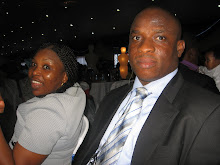
.jpg)

